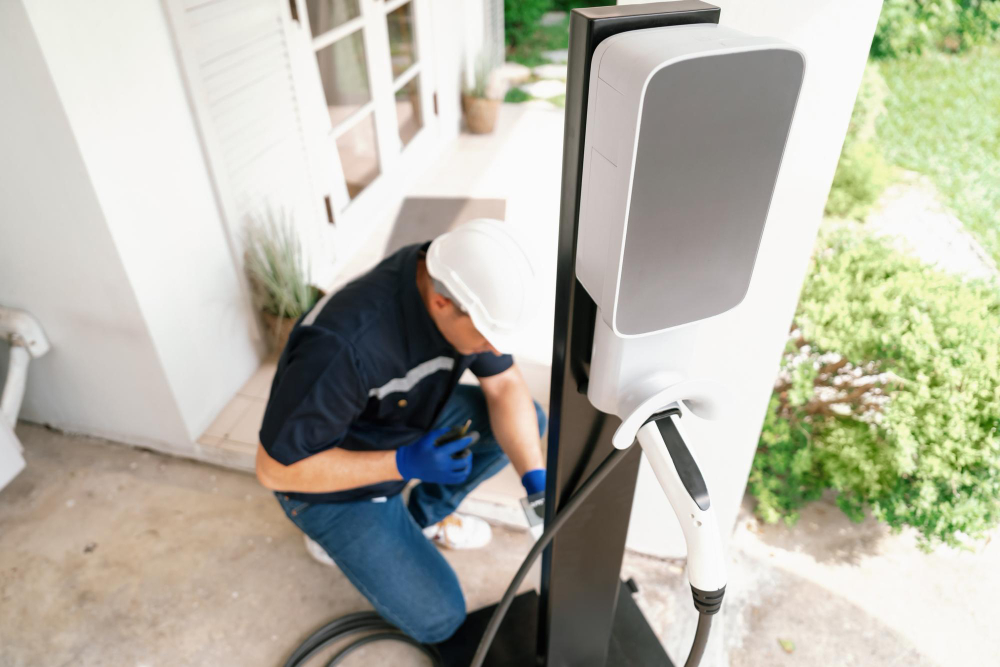
Finding reliable electrical contractors in Orlando, Florida to install an EV charger feels like navigating I-4 during rush hour—stressful and confusing. You just bought a new Tesla, Ford Lightning, or Hyundai Ioniq, and plugging it into a standard wall outlet takes days, not hours. We're here to clear up the confusion so you can wake up to a full battery every morning.
This guide walks you through everything you need to know about installing a Level 2 charger at home. We'll cover costs, why DIY is a bad idea, and how to spot a pro who knows what they're doing.
What Are the Different Types of EV Chargers?
There are three main levels of charging, but only two apply to residential homes. Level 1 uses a standard 120-volt outlet and adds about 3-5 miles of range per hour. Level 2 uses a 240-volt circuit (like your dryer) and adds 25-40 miles of range per hour. DC Fast Charging is for commercial stations and isn't available for residential installation.
Level 1: The "Emergency" Option
Most EVs come with a mobile connector kit that plugs into a standard three-prong outlet. While this is convenient because you don't need an electrician, it's painfully slow. If you drive more than 30 miles a day—say, a round trip from Altamonte Springs to Downtown Orlando—a Level 1 charger won't replenish your battery overnight.
Level 2: The Home Standard
This is what 95% of our customers choose. A Level 2 station runs on 240 volts and typically requires a dedicated 40 to 60-amp circuit. This setup charges your vehicle 7 to 10 times faster than a standard wall outlet. It means you can arrive home with 10% battery at 6 PM and be fully charged by the time you leave for work the next morning.
Why Hire a Professional for EV Charger Installation?
Hiring a professional ensures your home’s electrical system can handle the heavy, continuous load of an EV charger without risking a fire. Electric vehicles draw a massive amount of power for hours at a time. A licensed electrician calculates your total load to ensure your panel doesn't overheat, keeps you compliant with Florida Building Code, and handles the permitting process with the city or county.
Safety and Code Compliance
When our team inspects a home in Orlando, we check the available capacity on your electrical panel first. EV chargers are "continuous load" devices. According to the National Electrical Code (NEC), the circuit must be rated for 125% of the charger's maximum output [1]. If you install a 48-amp charger, you need a 60-amp breaker and properly sized wire. Get this wrong, and you risk melting the receptacle or starting a fire inside your walls.
Avoiding Electrical Hazards
In our years serving Central Florida, we've seen plenty of dangerous DIY attempts. We recently helped a customer in Dr. Phillips who tried to use an existing dryer outlet for their charger. The outlet wasn't industrial-grade, and the constant heat caused it to melt. Professional contractors use commercial-grade receptacles (like NEMA 14-50) designed to withstand the heat generated by hours of high-amperage charging.
Warranty and Liability
Most EV charger manufacturers require professional installation to keep the warranty valid. If a DIY installation fails and damages your car’s onboard charging module—which can cost upwards of $3,000 to replace—you're on the hook.
How Much Does It Cost to Install an EV Charger in Orlando?
The cost to install a Level 2 EV charger in Orlando typically ranges from $800 to $2,500, including labor and materials. The charger unit itself usually costs between $400 and $800. Simple installations where the panel is close to the garage cost less, while complex jobs requiring panel upgrades or long wire runs drive the price up.
Breakdown of Costs
- Charger Unit: $400 - $800 (Brands like Tesla, Wallbox, ChargePoint).
- Labor and Materials: $400 - $1,200. This depends on the distance from your electrical panel to the charging spot. Copper wire is expensive, so a 50-foot run across the attic costs significantly more than a "back-to-back" install right next to the panel.
- Permit Fees: Orange County and City of Orlando permits usually run between $100 and $200 [2].
Potential Electrical Upgrades
This is the biggest variable. If you live in an older home in Winter Park or College Park with a 100-amp panel, you might not have enough "room" for a charger. Adding an EV load might require a service upgrade to 200 amps. A panel upgrade typically costs between $2,000 and $3,500.
What to Look for in Electrical Contractors in Orlando, Florida
Look for a licensed, insured contractor with specific experience in EV infrastructure, not just general electrical work. Check that they pull permits for every job—this protects you if there's ever an insurance claim. Ask about their experience with load calculations and demand management systems, which can save you money if your panel is near capacity.
Local Experience Matters
Why does local experience count? Because homes in different parts of Orlando have different quirks.
- Lake Nona & Hamlin: Newer construction often has 200-amp panels, making installation straightforward. However, the garages are often pre-wired with conduits that can be tricky to navigate if you don't know the builder's layout.
- Conway & Delaney Park: Many 1950s and 60s homes here have smaller panels and older wiring. A contractor needs to know how to carefully assess these systems to avoid overloading them.
- HOA Restrictions: Neighborhoods like Baldwin Park or Celebration have strict architectural guidelines. You need a contractor who knows where you can and cannot mount equipment on the exterior of your home.
Licensing and Insurance
Never hire an unlicensed handyman for this. In Florida, you can verify a contractor's license through the DBPR website. Proper insurance protects you if a worker gets hurt on your property or if they accidentally damage your home.
What Is the Installation Process?
The installation process takes about 4 to 6 hours for most homes and starts with a site assessment. We calculate your home's electrical load, file the necessary permit applications with the local building department, run the new dedicated circuit, mount the charger, and perform safety testing before handing it over to you.
1. Initial Consultation & Load Calculation
We don't just guess; we do the math. We look at your AC unit, water heater, oven, and dryer. If your home uses 80 amps at peak and you have a 100-amp service, adding a 40-amp charger isn't safe. We verify that your system can handle the additional load without tripping the main breaker.
2. Obtaining Permits
We handle the paperwork. Whether you're in Winter Garden, Orlando proper, or unincorporated Orange County, we file the permit. This involves submitting a diagram of the work to the city.
3. Wiring and Mounting
We run a new circuit from your panel to the garage or driveway. We use heavy-gauge wire protected by conduit. The charger is mounted securely to studs or masonry. We prioritize aesthetics—no one wants ugly conduit running across the middle of their garage wall if it can be hidden.
4. Testing and Commissioning
Once powered up, we test the voltage drop and ensure the ground is secure. We'll help you connect the charger to Wi-Fi if it’s a smart unit, so you can track your energy usage.
What Local Regulations and Incentives Exist?
Orlando residents can take advantage of utility rebates and a federal tax credit that covers 30% of installation costs up to $1,000. OUC and Duke Energy often have programs that offer bill credits for off-peak charging. Local building codes require all EV charger circuits to have GFCI protection if they are plug-in models.
Utility Rebates
Check with OUC or Duke Energy. Sometimes they offer a rebate on the charger purchase or a credit for allowing them to manage charging during peak grid usage events (usually hot summer afternoons).
Federal Tax Credit
The Alternative Fuel Vehicle Refueling Property Credit allows you to claim 30% of the cost of hardware and installation on your federal taxes. That’s a significant saving that can offset the cost of a higher-quality charger.
Common Mistakes to Avoid
The most common mistake is assuming "a plug is a plug" and using cheap materials that overheat under continuous load. Another major error is ignoring the total electrical load of the house, leading to a main breaker that trips whenever the AC and car run at the same time.
The "Dryer Outlet" Myth
We hear this a lot: "Can't I just use my dryer outlet?" Usually, no. Your dryer is likely in the laundry room, not the garage. Even if it is in the garage, standard dryer outlets aren't rated for the continuous high draw of an EV. They are designed for intermittent use. Plugging an EV in and out daily wears out the tension in the receptacle, creating resistance and heat.
Overlooking the Panel Capacity
Just because there is physical space for a breaker in your box doesn't mean you have the electrical capacity. If you have a pool heater, two AC units, and an electric range, your panel might be maxed out. A professional panel upgrade might be necessary before you can charge at high speeds.
Future Trends in EV Charging
Home EV charging is moving toward bi-directional capability, allowing your car to power your home during an outage. We're also seeing more integration with solar panels, where smart chargers automatically adjust to pull power only when your solar array is producing excess energy.
Bi-Directional Charging (V2H)
Imagine a hurricane knocks out power in Oviedo. With the right equipment, your Ford F-150 Lightning can reverse the flow of electricity and power your lights and fridge for days. This technology requires specialized transfer switches and a very specific installation process.
Smart Energy Management
New smart panels and chargers talk to each other. If you turn on the oven and the dryer, the charger automatically throttles down to prevent overloading the panel. This technology can sometimes save you from needing a pricey service upgrade.
Ready to Power Up Your Ride?
Don't let range anxiety keep you from enjoying your new vehicle. You need a team that understands the unique electrical challenges of Florida homes. Whether you need a simple NEMA 14-50 outlet or a hardwired high-speed station, we get it done right the first time.
Contact Spectrum Electric today for professional EV charger installation in Orlando, Florida. Let’s get you charged up and back on the road.
Sources:
[1] National Fire Protection Association (NFPA). "Electric Vehicle Safety Information."
https://www.nfpa.org/education-and-research/electrical/electric-vehicles
[2] Angi. "A Complete Guide to Electric Vehicle Charging Installation Costs"
https://www.angi.com/articles/installing-electric-car-charging-station.htm