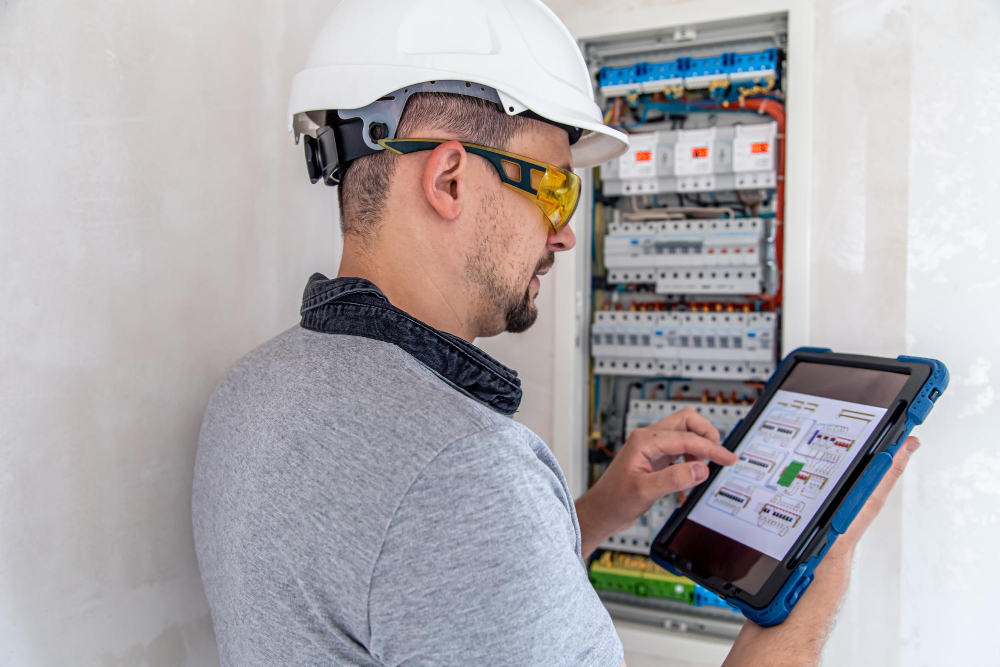
Experienced electricians in Orlando, Florida, see it every summer: a sudden lightning strike fries an expensive AC compressor instantly. It’s a costly nightmare that usually happens right when the heat index hits 95 degrees. While many homeowners rely on power strips for their TVs, they often overlook surge ties for their HVAC systems until it’s too late. Here is why we recommend this specific layer of protection for your home.
Living in Central Florida means dealing with daily thunderstorms, especially from June through September. Your air conditioner sits outside, exposed to the elements and vulnerable to electrical spikes. A surge tie acts as a dedicated bodyguard for that unit. It is a small investment compared to the massive cost of replacing a central air system.
What Are Electrical Surges?
Electrical surges are brief, intense spikes in voltage that travel through your home's electrical wiring and can destroy sensitive electronics instantly. In Orlando, lightning strikes are a major cause, but surges also originate from the power grid switching or even large appliances inside your home turning on and off. When a motor in your refrigerator or AC starts up, it creates a small surge that degrades electronics over time.
Most people think of lightning when they hear "surge," and for good reason. Florida is the lightning capital of the United States. According to the Insurance Information Institute, Florida consistently ranks first in the nation for lightning-related insurance claims [1]. But internal surges are actually more common. These smaller, daily spikes might not blow out a TV immediately, but they wear down circuit boards and shorten the lifespan of your appliances.
For residents in older neighborhoods like College Park or Winter Park, where the infrastructure might be dated, these fluctuations can be even more frequent. The wiring in homes built in the 1950s wasn't designed to handle the load of modern electronics. This makes the risk of damage from both internal and external surges significantly higher.
What Is a Surge Tie?
A surge tie is a single-use surge protection device specifically designed to protect your HVAC condenser unit from high-voltage spikes. It connects directly to the electrical disconnect box outside your home near the AC unit. When a surge hits, the device detects the excess voltage and diverts it to the ground before it can enter the compressor and burn it out.
Think of a surge tie like a fuse or an airbag for your air conditioner. Its job is to take the hit so your expensive equipment doesn't have to. Once it absorbs a massive surge, it "sacrifices" itself. The surge tie will burn out and need replacement, but your $5,000 to $8,000 AC unit remains safe and operational.
The main advantage of a surge tie is its proximity to the equipment it protects. Whole-home surge protectors are installed at the main breaker panel, which is great for general protection. However, a surge tie sits right at the point of use. This offers a faster reaction time for the specific equipment it is guarding. The disadvantage is that it is a "one and done" device. Once it does its job, you have to buy a new one.
How Much Do Electrical Surges Cost Orlando Homeowners?
In Orlando, electrical surges cost homeowners millions of dollars annually in damaged appliances, with AC repairs often ranging from $1,500 to over $3,000 for a compressor replacement. If a surge destroys the entire condenser unit, you could be looking at a bill between $5,000 and $10,000 depending on the SEER rating and size of your system.
Compare that to the cost of prevention. A professionally installed surge tie typically costs between $150 and $300. That is less than the cost of a single emergency service call. When you consider the math, the return on investment is clear. Spending a few hundred dollars now protects you from spending thousands later.
Beyond the financial cost, there is the cost of comfort. If your AC gets fried in July, you might be waiting days for a replacement part or a new unit installation. In the humid Orlando heat, where temperatures stay in the 90s, going without AC is not just uncomfortable. It can be dangerous for pets, the elderly, and young children.
What Are Your Surge Protection Options?
Surge protection comes in three main tiers, and understanding the difference helps you make the right choice for your budget and home. You have whole-house protectors, point-of-use strips, and dedicated equipment protection like surge ties.
Whole-House Surge Protectors
These devices connect directly to your main electrical panel. They act as a gatekeeper for all electricity entering your home from the grid. If a massive surge comes in from a lightning strike on a nearby power line, the whole-house protector clamps down on the excess voltage.
- Cost: Typically $400 to $700, including professional installation.
- Benefit: Protects the wiring in your walls and every outlet.
- Limitation: It might not stop internally generated surges from traveling between circuits.
Point-of-Use Surge Protectors
These are the power strips you likely already have behind your TV or computer. They are excellent for low-voltage electronics.
- Cost: $20 to $100 depending on the joule rating.
- Benefit: Cheap and easy to install yourself.
- Limitation: They can't handle the high voltage requirements of major appliances like an AC or dryer.
Surge Ties
As discussed, these are dedicated to specific high-voltage equipment.
- Cost: $150 to $300 installed.
- Benefit: High-level protection for your most expensive appliance.
- Limitation: Only protects the device it is attached to.
Why Electricians in Orlando, Florida Recommend Surge Ties
Electricians in Orlando, Florida, strongly recommend surge ties because we know that layers of protection are the only way to truly safeguard a home in this climate. Relying on just one method often leaves gaps. A whole-home protector is excellent, but if lightning strikes the ground near the AC unit, the surge can travel up the refrigerant lines or ground wire and bypass the main panel entirely.
From a safety perspective, a surge tie minimizes the risk of electrical fires. When an AC compressor shorts out due to a massive voltage spike, it can overheat the wiring and cause sparking. By cutting off that voltage immediately, the surge tie prevents thermal damage.
Cost-effectiveness is another major factor. We hate having to hand a customer a bill for $3,000 because of a random lightning strike. It is a heartbreaking conversation to have. Recommending a $200 device that prevents that conversation is simply good customer service. We treat your home the way we treat our own.
Real-Life Examples in Central Florida
We recently worked with a homeowner near Lake Eola in downtown Orlando. During a heavy afternoon storm, lightning struck a transformer just a block away. The surge sent a massive spike through the neighborhood grid. Several of their neighbors lost their air conditioning units entirely. One neighbor even had their refrigerator circuit board fried.
Our customer had installed a surge tie the previous spring during a routine maintenance check. When we arrived to inspect their system, we found the AC wasn't running. Upon checking the disconnect box, we saw the surge tie was burnt out and the indicator light was off. It had done its job perfectly. We replaced the surge tie for a fraction of the cost of a new unit, and their AC started right up.
This happens constantly across Orange and Seminole counties. In areas with overhead power lines, like older sections of Conway or Audubon Park, the risk is even higher. Trees fall on lines, transformers blow, and lightning hits poles. Having that localized protection on your AC is often the difference between a minor repair and a total system replacement.
How to Choose the Right Surge Protection
Choosing the right surge protection depends on the size of your home, the age of your electrical panel, and the value of your appliances. You want a device with a high enough joule rating to handle the energy load. For an AC unit, you typically need a protector rated for at least 1,200 to 2,000 joules or more.
It is also smart to check the warranty connected to the device. Many reputable manufacturers offer a warranty that covers the equipment if the surge protector fails. This adds another layer of financial security.
Consulting with a licensed electrician is the best way to assess your needs. We can look at your panel's amperage and the age of your wiring. If you have a 200-amp panel in a newer home in Lake Nona, your needs might look different than someone with a 100-amp panel in a 1960s home in Maitland.
[Related Blog Post: How Often Should You Schedule an Electrical Inspection?]
Can I Install a Surge Tie Myself?
While you can buy surge protection devices online, installing a surge tie is not a DIY project. It involves working with 240 volts of electricity, which is lethal. The device connects inside the disconnect box or the condenser's electrical panel. One wrong move can result in severe injury or electrocution.
Professional installation ensures the device is wired correctly and meets local codes. The Florida Building Code has specific requirements regarding electrical work, and improper installation can void your AC manufacturer's warranty.
Hiring a professional also guarantees the device is compatible with your specific AC model. Different units have different voltage and phase requirements. Putting the wrong surge tie on your unit offers zero protection and could potentially cause issues with the system's operation.
[Related Blog Post: Why Surge Protection Installation Is Critical for Your Home]
Do I Really Need This?
You might wonder if this is just an upsell. Consider the National Electrical Manufacturers Association (NEMA) data, which indicates that the average home has $15,000 worth of equipment that can be damaged by voltage surges [2]. In Orlando, your AC represents a huge chunk of that value.
If you are lucky, you might go years without a direct hit. But in Florida, luck runs out eventually. We view surge ties as essential insurance. You have homeowner's insurance for fires and floods. You have auto insurance for accidents. Surge protection is insurance for your electronics against the inevitable Florida weather.
[Related Blog Post: When to Upgrade Your Electrical Panel: A Homeowner's Guide]
Need Help With Your Surge Protection?
Don't wait until the next storm rolls through to think about protecting your home. If you want to secure your AC and save money in the long run, we can help.
Contact Spectrum Electric today. Our team of skilled electricians in Orlando, Florida, will inspect your system and install the right protection for your home. We'll give you peace of mind knowing your appliances are safe from the next big strike.
Sources:
[1] Insurance Information Institute. “Facts + Statistics: Lightning.”
https://www.iii.org/fact-statistic/facts-statistics-lightning
[2] National Electrical Manufacturers Association. “Surge Protection Institute.”
https://www.nemasurge.org/