The call came in on a Tuesday morning from a homeowner in an older neighborhood just outside Winter Park. One of her kitchen outlets had stopped working. No tripped breaker she could find, no burning smell, nothing dramatic. She had tried resetting the breaker herself without luck and called us out to take a look. What started as a four minute fix turned into one of the more important visits we made that month.
The Easy Fix
The dead outlet was downstream from a ground fault outlet in the kitchen that had tripped, which is common in homes of that era where one device protects several outlets on the same circuit. We reset it, confirmed the protected outlets were live, and the original problem was solved within ten minutes. For a lot of contractors, that is where the visit ends. The check gets written and the truck leaves.
Why We Kept Looking
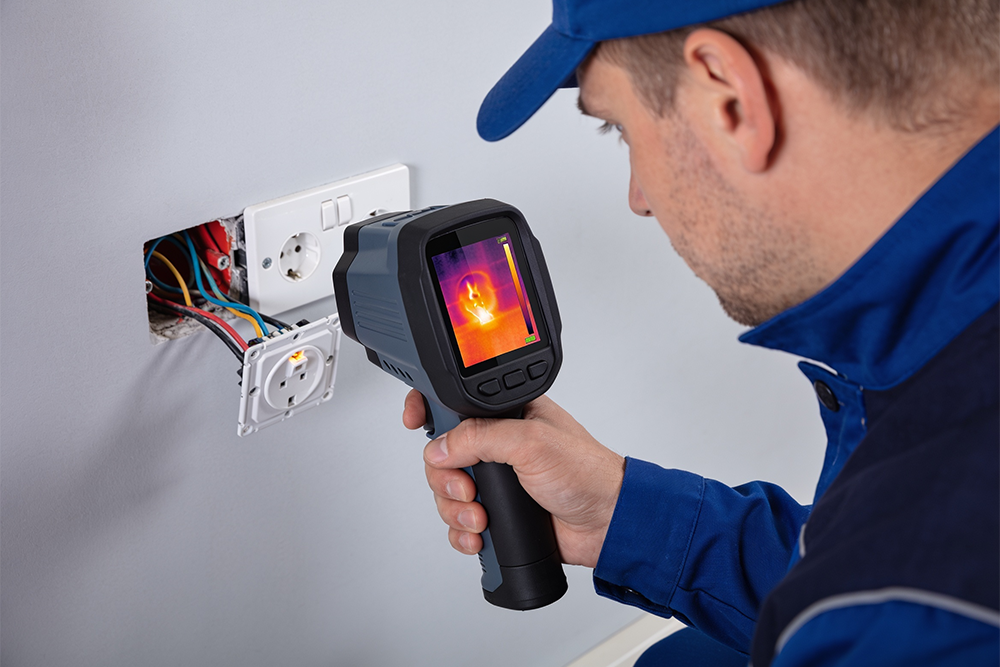
Every trip we make includes a walkthrough of the home's accessible electrical system, because what a homeowner calls about and what actually needs attention are frequently two different things. We pulled out the thermal camera and moved through the house. In the living room, one outlet showed a heat signature warmer than it had any business being with nothing meaningful plugged into it. We flagged it and kept going. Then another in the hallway. Then one in a back bedroom.
By the end of the walkthrough we had found several outlets throughout the home running warm at the connection points, and not one of them had failed visibly or tripped anything. To anyone walking through without a thermal camera, every outlet looked and worked completely normally.
The Hidden Cause
We pulled the cover plates and the picture came into focus. The home had aluminum branch circuit wiring, the type installed widely from the mid 1960s into the early 1970s. Aluminum expands and contracts more than copper as it heats and cools, and over decades that movement works the connections loose at every termination point. Those connections had been slowly loosening for years, developing resistance, and generating heat silently behind the cover plates. The ground fault outlet that prompted the call was almost certainly a symptom of the same underlying stress, not a coincidence.
The Second Opinion That Changed Everything
When we explained what we found, the homeowner told us something important. Another contractor had already told her the aluminum wiring meant a complete rewire, with walls opened, drywall patched, and a bill several times what she expected. She had been sitting on that estimate for weeks, dreading it. A full rewire in new copper is always the gold standard, but it was not the only safe path for her home, and nobody had told her that.
A Solution That Fit the Home
We recommended listed connectors made specifically for aluminum to device connections at every outlet, switch, and fixture. These use an approved compound and a connection rated for aluminum that stops the expansion and contraction problem at the termination point without touching the wire inside the walls. It is a recognized, code compliant solution that addresses the actual failure mechanism, not a shortcut. No drywall opened. No paint touched. No weeks of disruption.
We completed the work over the following days, rechecked every connection with the thermal camera afterward, and confirmed the heat signatures were gone across the board.
The Lesson for Older Homes
What looked like a tripped outlet was a slow moving hazard at nearly every connection point, the kind that does not announce itself until it does. The difference was taking thirty extra minutes to look. If your home is from that era, an honest electrical inspection can tell you whether you need a full rewire or a far less invasive fix. Spectrum Electric serves Apopka, Orlando, Casselberry, and the surrounding cities. Call 407.880.8977 or request an inspection.