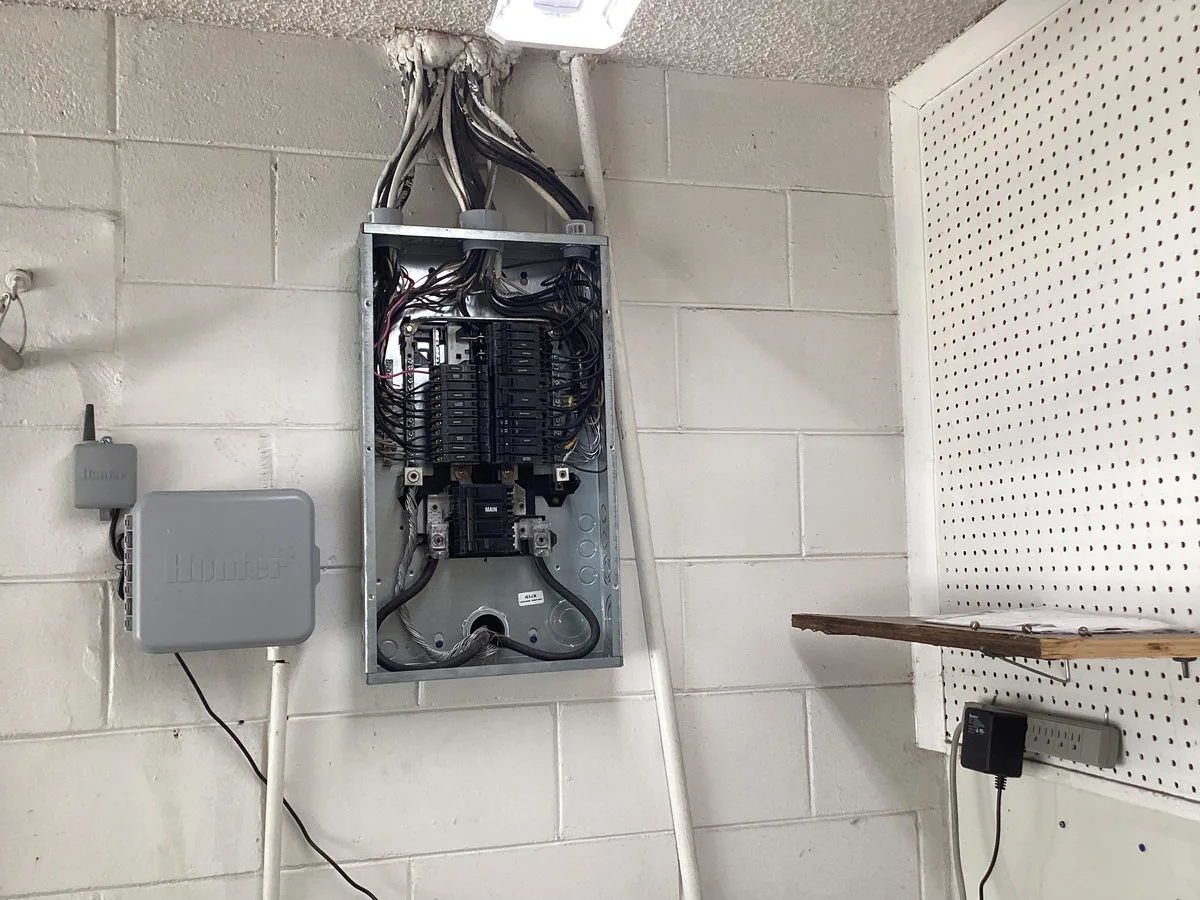
Your electrical panel is the part of your home's electrical system that almost nobody thinks about until something goes wrong. When it starts failing, it usually gives you warnings before it becomes a fire hazard. Knowing what to look for, and acting on it before the problem escalates, is the difference between a planned upgrade and an emergency. Spectrum Electric Inc. provides free panel assessments for homeowners across the Apopka area and surrounding communities. Book your free panel assessment with Spectrum Electric Inc. or call (407) 880-8977 to have a licensed electrician look at what you are actually working with.
Sign one: breakers that trip constantly
A breaker that trips once in a while after an unusual load is doing its job. A breaker that trips repeatedly under normal household use is telling you something. In Apopka homes built in the 1970s and 1980s, the most common reason for chronic tripping is a 100-amp panel that was correctly sized for the electrical loads of that era but is genuinely inadequate for a modern home running central air conditioning, a full appliance suite, and anything else that has been added over the decades. The panel is not broken. It is simply full, and the breakers are the first signal that the system is being asked to do more than it was designed to handle. Resetting the breaker solves the symptom. It does not address the underlying capacity problem.
Homeowners in the Casselberry area, where a significant number of homes date to the same period, encounter a related issue: individual breakers that have been reset so many times they no longer hold reliably. A breaker that fails to trip when it should is significantly more dangerous than one that trips too often. It is no longer protecting the circuit it serves, which means an overloaded wire can heat up without the protection mechanism cutting the power. If a breaker in your panel looks discolored, feels loose, or has been reset repeatedly over months, that is not a breaker problem in isolation. It is a panel problem.
Older homes in the Winter Garden area that were originally built for smaller families with fewer appliances sometimes have panels that look intact but are running at or near capacity every day. The addition of a window air conditioning unit, a chest freezer in the garage, or an EV charger can push a marginal panel into chronic overload. The solution is not removing the new load. It is upgrading the system that was already at its limit.
Sign two: the panel is warm to the touch
A properly functioning electrical panel should not be noticeably warm on the outside of the cabinet door. Heat building up inside the panel is a sign that connections are loose, conductors are overloaded, or components inside are failing. It is not a sign to wait and monitor. Electrical heat that is not being dissipated correctly is a fire risk, and it does not resolve on its own. If your panel door feels warm when you touch it, schedule an inspection before you schedule anything else.
Sign three: you smell something burning near the panel
A burning smell near an electrical panel, even a faint one that comes and goes, is not something to explain away. Burning insulation has a distinctive odor, and if it is coming from the panel, it means something inside is overheating. Turn off the main breaker if you can do so safely and call an electrician. This is not a wait-and-see situation.
Signs four and five: Federal Pacific or Zinsco on the label
These two brands deserve their own section because they are not just old panels. They are panels with a documented failure history that most licensed electricians will not leave in a house they work on. Federal Pacific Electric Stab-Lok panels, manufactured from the 1950s through the 1980s and still present in a large number of Central Florida homes, have a known problem: the breakers frequently fail to trip under overload conditions. The protection mechanism, the core function of the breaker, does not reliably work. Zinsco panels, similarly common in homes of that era, have documented issues with breakers welding to the bus bar and failing to disconnect even when they appear to have tripped.
If you open your panel and see either of those names on the label, the recommendation from virtually every licensed electrician is straightforward: replace it. Not because the panel looks bad. Because the failure mode of these specific products creates fire risk that a visual inspection cannot rule out.
What a panel upgrade actually involves
A standard residential panel upgrade in Orange or Seminole County requires a permit and inspection, both of which Spectrum handles as part of the project scope. The upgrade itself typically takes a day. The permit process runs alongside the scheduling, so by the time the work is done, the inspection is already on the calendar. Costs for a standard upgrade generally run in the range of roughly $1,800 to $3,500 depending on the home's configuration, the service amperage being installed, and any related work the assessment surfaces. The written estimate is the price. There are no additions at the end.
Spectrum is Florida State Certified (license EC13008455), fully insured, and every install carries a 1-year workmanship warranty. An electrician in Apopka who pulls the permit and schedules the inspection is the one who stands behind the work after the job is done. If you are not sure whether your panel needs attention, a thorough electrical inspection is the right starting point. It tells you what you are actually working with before any decision is made.
Call Spectrum Electric Inc. at (407) 880-8977 or request your free panel assessment from Spectrum Electric Inc. and get a straight answer about where your panel stands.