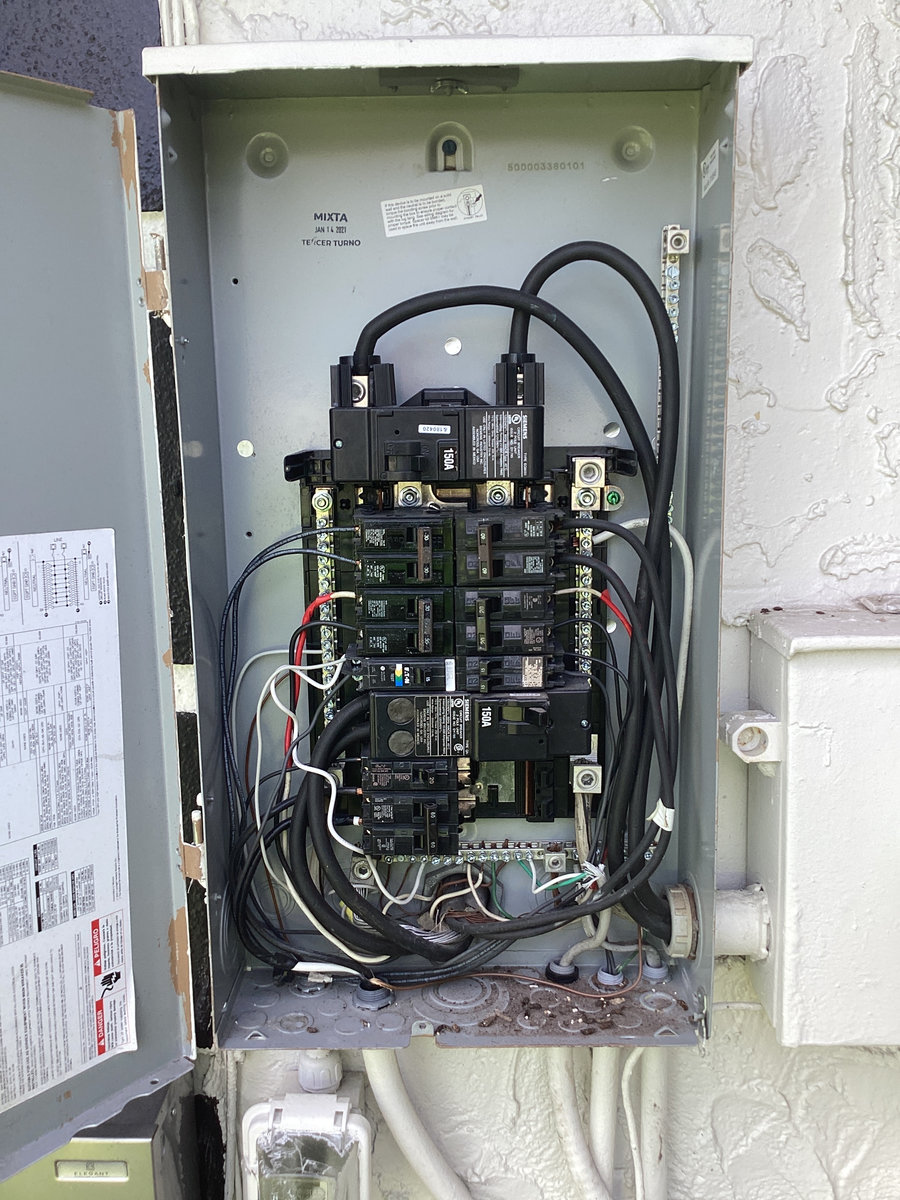
If your older Central Florida home still has a Federal Pacific or Zinsco electrical panel, that is worth taking seriously, because those breakers are known to fail to trip, and insurance companies increasingly treat them as a risk they will not carry. Many homeowners have no idea what is behind their panel cover until a sale or an inspection forces the question. If you suspect yours might be one of these, reach out to our team at (407) 880-8977. At Spectrum Electric, we replace these panels regularly and can tell you fast what you are dealing with.
What makes Federal Pacific and Zinsco panels so dangerous?
The breakers do not reliably trip, which defeats the one job a breaker exists to do. A breaker is supposed to cut power the moment a circuit overheats. Federal Pacific and Zinsco breakers are known to fail at exactly that, so an overheating circuit can just keep heating with nothing stopping it, and that is how a fire starts inside a wall. There are replacement breakers that fixed some of the known issues, but they did not settle the matter. Insurance companies looked at the track record and decided these panels are more risk than they are willing to take on. In practice that means many insurers now require the panel to be changed before or after a sale, and having one can affect your home's price. A modern electrical panel upgrade removes that liability from your home. It is one of the few upgrades that is about safety first and resale value second.
How do you find out what kind of panel you have?
Start with the breakers and the panel cover. A Federal Pacific, or FPE, panel usually has breakers with a distinctive red handle or red stripe, which is a quick visual tell. Beyond that, the manufacturer name is almost always printed somewhere on the panel itself, usually on the cover at the top above the breakers, or near the panel schedule where the individual breakers are labeled. If you open the closet or the garage wall and see a name like Federal Pacific, FPE, Zinsco, or Sylvania, that is your answer. What we do not recommend is pulling the cover off yourself to go hunting, since the inside of a live panel is exactly where the danger lives. If you are not sure what you are looking at, a quick electrical inspection settles it, and we can tell you whether your specific panel is one of the known problem models or a modern one that is fine to leave alone.
What does a panel upgrade actually involve, and what should you expect?
It depends on whether you are simply replacing the panel or increasing your home's electrical capacity. If you are just swapping an outdated panel for a current one, that is the more cost effective route, because you are not touching much beyond the panel. The moment you add circuits, though, the work has to be brought up to current code, which expands the scope. And if you actually need more power coming into the house, not just a new box, then the incoming service has to be upgraded along with the panel. That larger job is common when people start adding big loads like EV chargers. So the honest answer on cost and timeline is that it tracks what you are trying to accomplish. A straight swap is one conversation. Adding capacity for the future is another. We will walk your panel with you and tell you which one your home actually needs, rather than selling you the bigger job by default.
Should you replace an FPE or Zinsco panel before you sell?
In most cases, yes, and dealing with it on your own timeline beats being forced into it. Buyers, inspectors, and insurers all flag these panels, so it tends to surface at the worst possible moment, in the middle of a sale, when you have the least leverage to shop around. Handling it ahead of time protects your family now and takes a known objection off the table later. If your home is older and you have never checked what panel it has, that is reason enough to look. Knowing what is in your panel is not an emergency, but it is one of those things that is far cheaper to handle on a calm Tuesday than in the middle of closing on your house, when a buyer and their insurer are the ones setting the deadline. When you are ready to find out where you stand, call (407) 880-8977 or get in touch with our team and we will get you a clear answer and a plan.