
Home Office Wiring and Dedicated Circuits in Winter Park
New circuits, a new ceiling box and a Square D panel that had just enough room left to make it work.
New circuits, a new ceiling box and a Square D panel that had just enough room left to make it work.
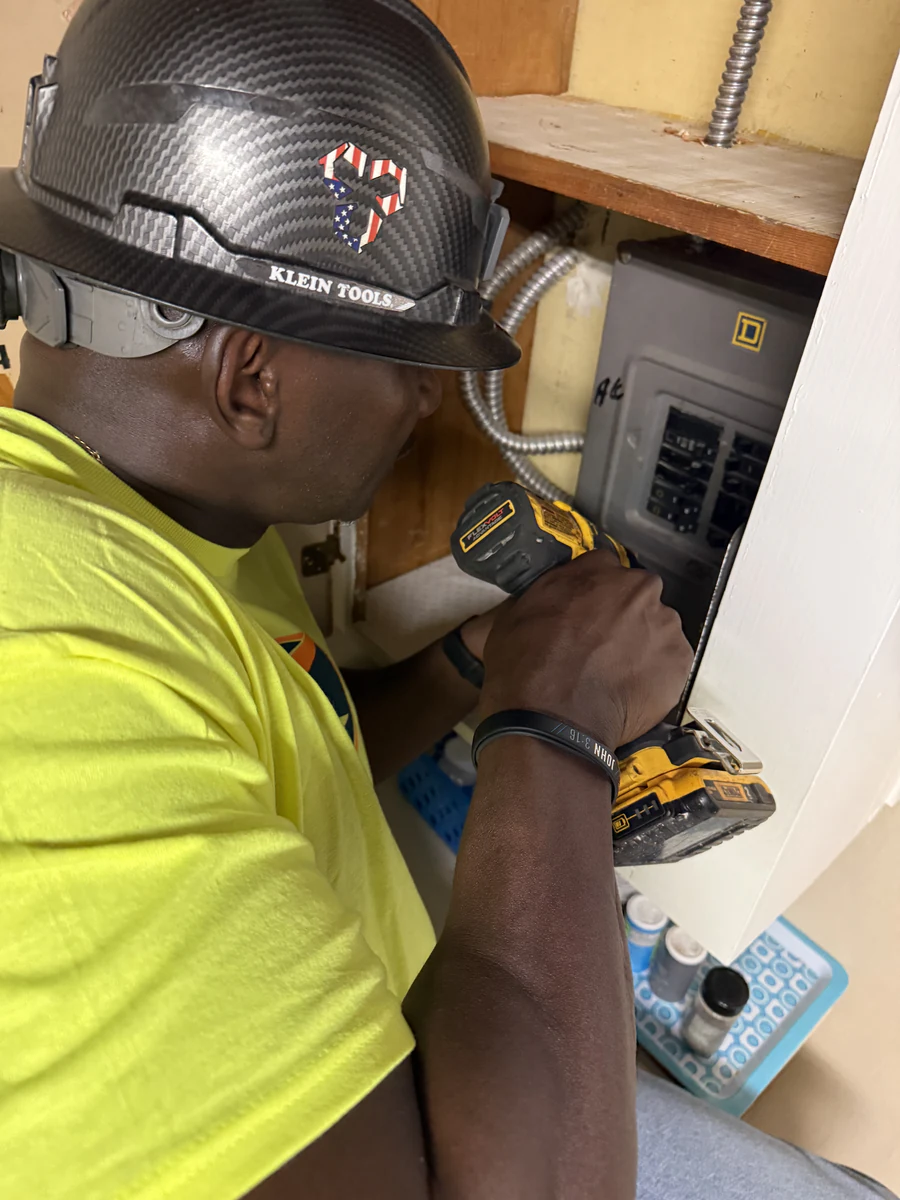
Not every job needs a crane. This one needed a van, a ladder, an impact driver and a clear plan for where the new circuits were going to come from.
The house is in Winter Park, which tells you something before anyone opens a panel. A lot of the housing stock here predates the way people use electricity now, and a spare bedroom converted into a working office is a load the original design never anticipated. A monitor or two, a docking station, a printer, a space heater in January and a window unit in August, all of it landing on a circuit that was sized for a lamp and an alarm clock. The panel in the photos is a Square D load center tucked into a closet, and the work started there. If you are looking for a licensed electrician in Winter Park, this is the ordinary, unglamorous end of residential electrical service, and it is the work that prevents the dramatic kind.
Because the existing bedroom circuit was never sized for it, and sharing is how you end up resetting a breaker every afternoon.
A bedroom branch in an older Central Florida house is typically shared with other rooms and sized for lighting plus incidental loads. Add a full workstation and the math changes. The nuisance trip is the polite version of that problem. The quiet version is a circuit running warm at eighty percent of its rating for eight hours a day, year after year, which ages terminations and eventually shows up as a discolored device or a loose neutral behind a cover plate nobody has removed in a decade.
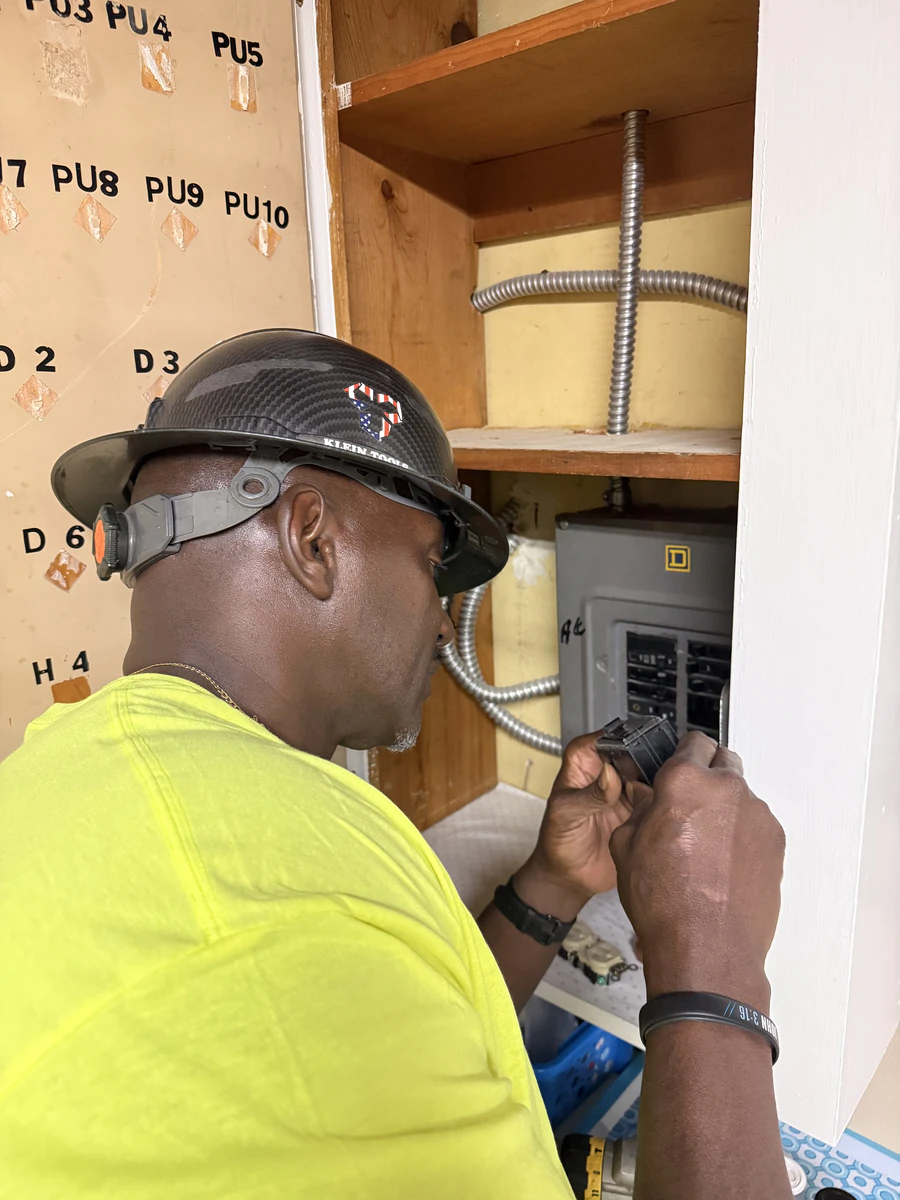
A dedicated circuit fixes it properly. New conductors, a new breaker at the panel, no sharing with anything else. The photos show a breaker going into the Square D with a DeWalt impact driver and a receptacle being prepped at the same panel. Sensitive equipment benefits from whole home surge protection as well, and if the panel itself has run out of space, the conversation becomes an electrical panel upgrade instead.
Through whatever path the house already gives you, which usually means a closet, an attic, or in this case the ceiling itself.
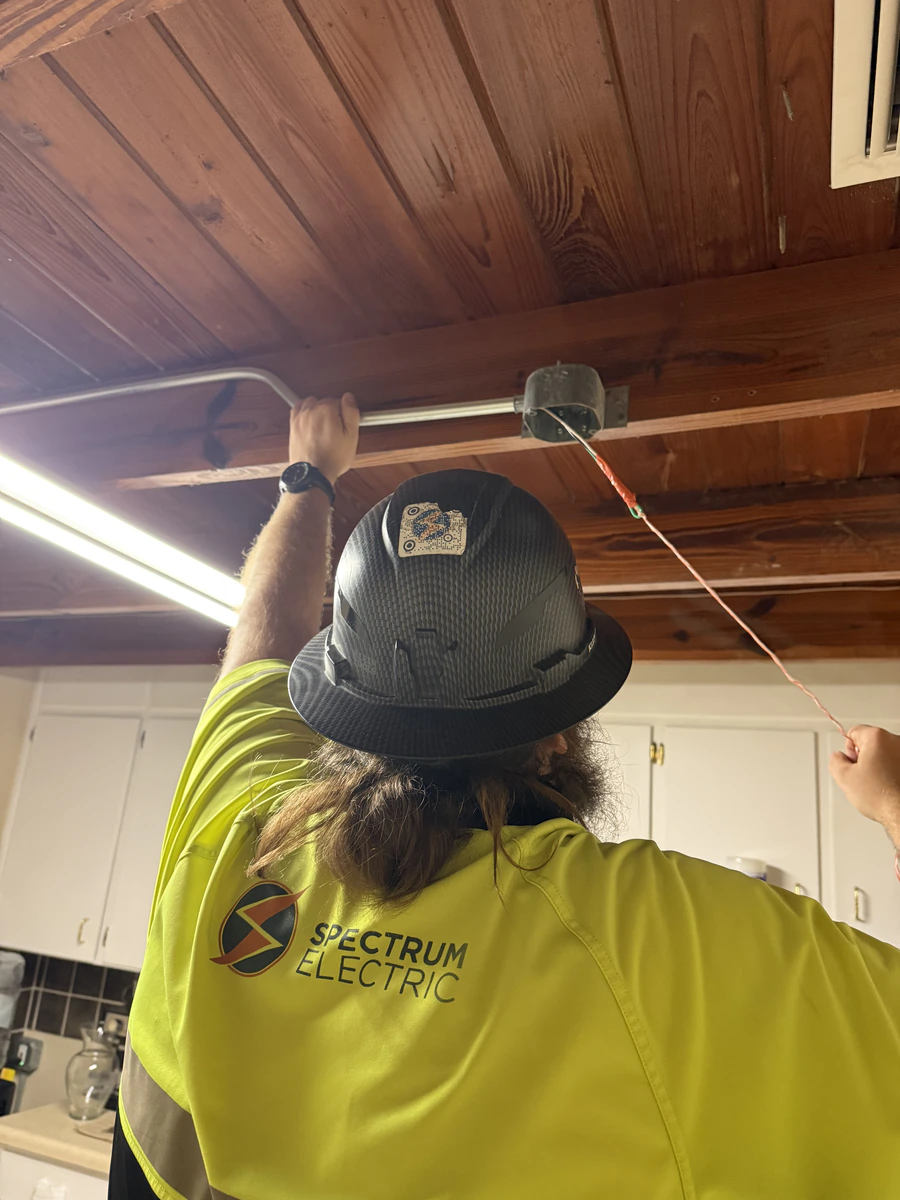
The second photo in the gallery shows the harder half of this job. That is a wood plank ceiling with exposed beams, and a new round metal ceiling box is going in between two of them with a pull line already dropped through. A plank ceiling has no cavity to hide in and no drywall you can patch invisibly afterward, so the fishing has to be right the first time. You can see the bend being set by hand at the box rather than fought into place from below.
Flexible metal conduit carries the rest of the run back to the panel. It is more work than cable in open framing and it is the right answer in a finished space, because it protects the conductors where they cross a closet or a joist bay that someone will eventually store boxes in. The new box also gives the room a proper fixture point, which is where lighting installation actually begins.
Not always, and it did not here. The Square D had usable space left, so the answer was breakers and the correct wire rather than a service change.
That is worth saying plainly, because a homeowner calling about a home office often expects to be sold a panel. Sometimes that genuinely is the right call. If the panel is full, if it is a brand with a known failure history, or if the service itself is undersized for what the house is now being asked to do, then adding circuits to it is putting good work on a bad foundation.
If it has room, sound bus and no signs of heat, it does not need replacing. The check takes a few minutes: available spaces, bus condition, the state of the existing terminations, and whether the service can carry the new load at all. We tell homeowners which of those two situations they are in before quoting anything. Anyone who is unsure where their panel stands can start with an electrical inspection and decide from there.

We will look at your panel, tell you honestly whether it needs replacing, and put in circuits that will still be right in ten years. Call (407) 880-8977.